
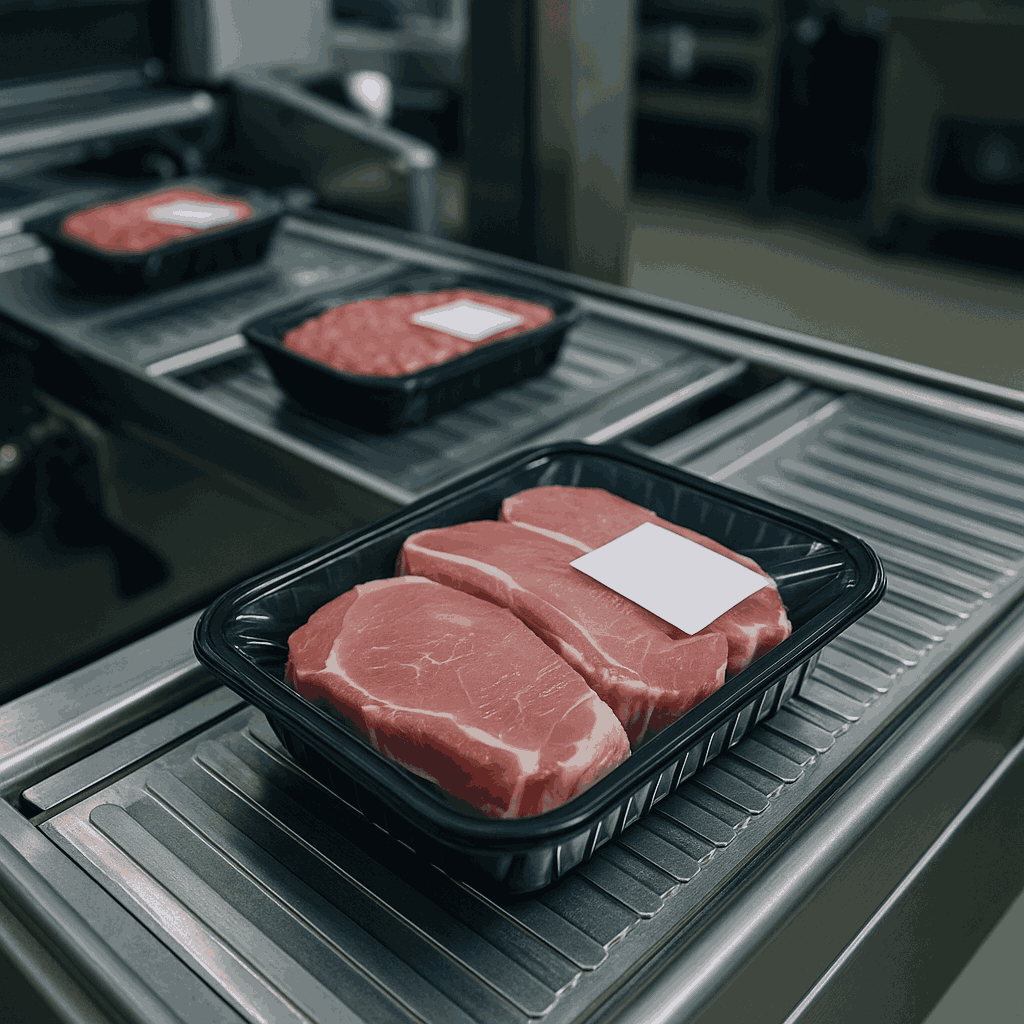
The Process of Producing and Packaging Meat Products with Hygienic Standards
Processed meat products such as sausages, cold cuts, ground meat, and packaged cuts require a precise and controlled process to maintain quality, flavor, and above all, food safety. Ensuring hygienic standards at every stage—from slaughter to final packaging—is vital for consumer health and product shelf life.
Key Steps in Production and Packaging:
-
Sanitary Slaughter under Veterinary Supervision:
Animals must be slaughtered in certified facilities under veterinary inspection to guarantee health and prevent contamination. -
Chilling and Quick Transport:
Fresh meat should be stored at cold temperatures (0–4°C) immediately and transported quickly to prevent microbial growth. -
Processing (Grinding, Cutting, Additives):
Meat is transformed into various forms, with approved additives (e.g., sodium nitrite) included to enhance color, shelf life, and safety. -
Packaging in Controlled Conditions:
Vacuum packaging or Modified Atmosphere Packaging (MAP) is used to minimize oxygen exposure and preserve freshness. -
Final Quality Control and Labeling:
Microbial testing, weight checks, and visual/smell inspections are performed, and the product is labeled with production date, expiry date, and storage guidelines.
Conclusion:
Hygienic meat processing and packaging are critical for gaining customer trust and entering both domestic and export markets. Proper implementation ensures extended shelf life, reduced waste, and protection of public health.

